

Apple's Brazil Framework Is Now Live: What Publishers Need to Know


Apple has officially launched its new payment framework for Brazil, effective with iOS 26.5. Developers can now offer alternative payment options, in-app third-party processors and links to Payment Links, in App Store apps in Brazil.
Side-by-side with Apple IAP is mandatory. Commissions range from 10%-21% on in-app purchases and 10%-15% on link-out transactions. Brazil becomes the fourth major market, after the US, EU, and Japan, where external payments are live on iOS.
Background: From CADE Settlement to Live Framework
In January 2026, Apple and Brazil's competition authority CADE reached a binding settlement requiring Apple to open iOS to alternative payments and third-party app distribution within 105 days. At the time, Apple had not published official developer documentation, the obligations were binding but not yet operational.
That changed on June 18, 2026. Apple announced the full Brazil framework alongside iOS 26.5, published official developer documentation, and opened enrollment. Brazil has moved from paper commitment to live program.
What Apple Is Now Allowing
Developers with iOS apps in Brazil can now offer:
- In-app alternative payment processing: integrate a third-party processor alongside Apple IAP
- Out-of-app offers (link-out): include links directing users to an external web checkout
- Alternative app marketplace distribution: distribute iOS apps outside the App Store through Apple-authorized third-party marketplaces
Activating these options requires enrolling in the StoreKit External Purchases or Offers Entitlement, updating to iOS 26.5, and agreeing to Apple's updated Developer Program License Agreement for Brazil. Side-by-side UI implementation and monthly commission reporting to Apple are also required.
The Fee Structure
One important note: our earlier analysis based on the CADE settlement referenced a 0% static text referral path and a 25% in-app rate. The official Apple documentation does not include the 0% static text path, and the in-app commission is 21%, not 25%. Publishers should rely on the official terms.
In-app purchases (App Store commission): 21% standard, reduced to 10% for qualifying developers - including Small Business Program participants, Video Partners, Mini Apps, and subscriptions after year one.
Apple payment processing (if using Apple IAP): +5%, applied at both the standard and reduced rates.
Link-out to website (Store Services Commission): 15% standard, reduced to 10% under the same eligibility criteria as above.
Alternative app marketplace distribution: 5% Core Technology Commission. No reduced rate available.
The App Store commission applies regardless of whether the developer uses Apple IAP or a third-party processor. Using Apple IAP adds the 5% processing fee on top.
Side-by-Side Is Mandatory
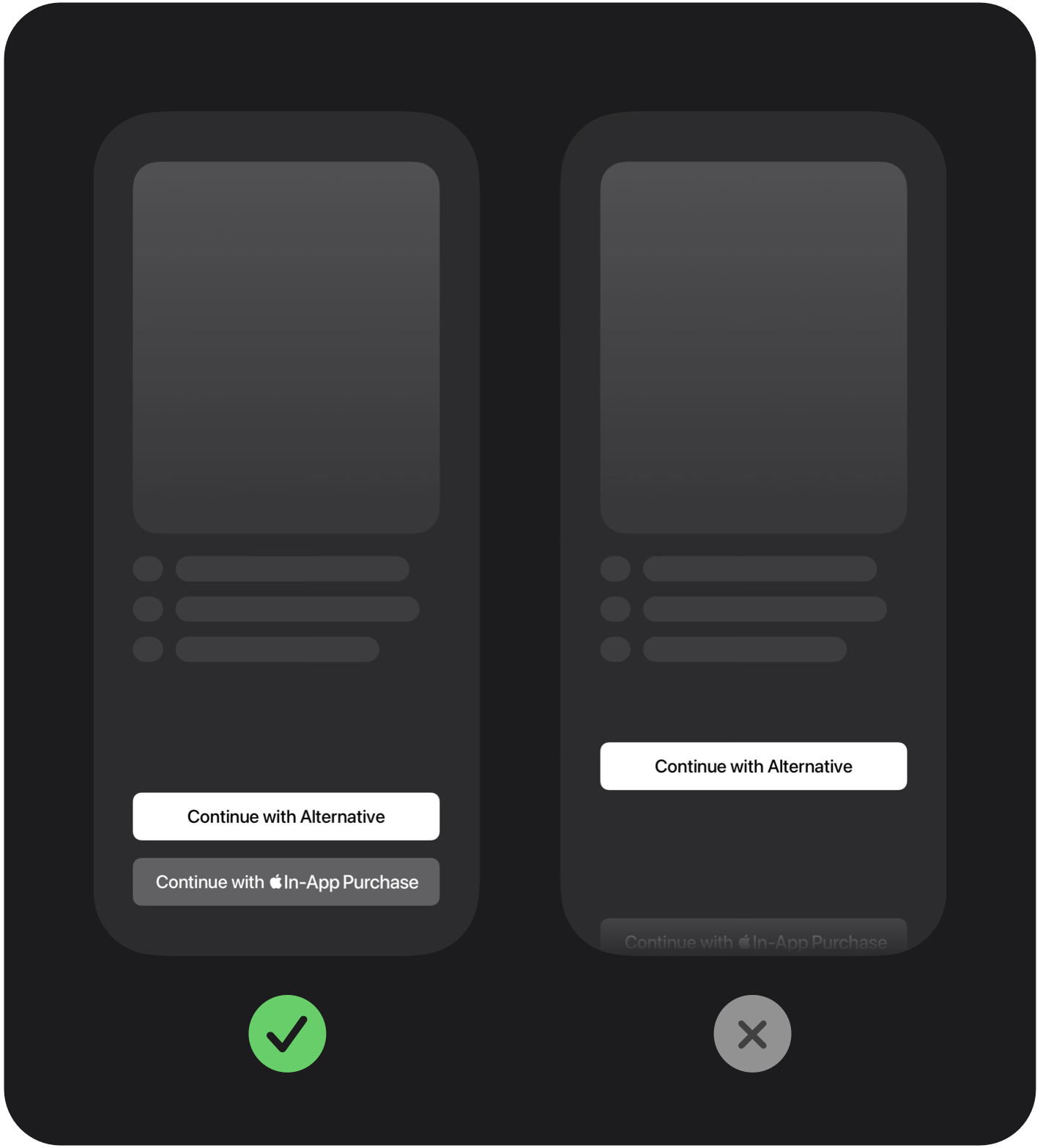
Brazil's framework explicitly requires Apple IAP to be presented alongside any alternative payment option, a formal requirement that mirrors Japan but differs from the EU, where Apple operates an either/or model.
Apps in the Kids category cannot include links to websites for transactions. Users under 18 are subject to additional parental controls for any alternative payment flows.
Brazil in Global Context
Brazil's launch reinforces a pattern forming across markets: regulators are forcing platforms to open up, while platforms retain commissions and control compliance terms. A quick comparison:
United States: Change came through litigation (Epic v. Apple, Epic v. Google). External payments currently carry 0% commission on both platforms — the only major market where this is true. The US remains the clearest economic case for external payments.
European Union: Driven by the DMA. Apple operates an either/or model (no side-by-side). Fees apply: Apple charges ~10%–18% depending on track; Google's External Offers Program charges ~10%-13%.
Japan: The MSCA created a side-by-side model similar to Brazil. Apple charges 15% on link-outs (10% for eligible programs) within a 7-day attribution window. Google charges 20% on most transactions within 24 hours.
Brazil: Now live, side-by-side model, 10%-21% in-app, 10%-15% link-out. Shaped by regulatory settlement rather than legislation, but structurally close to Japan.
Android in Brazil: Google has not published a Brazil-specific program. Brazil falls under Google's global March 2026 framework, scheduled for the rest-of-world rollout by September 2027. Apple has moved significantly faster here.
What This Means for Studios
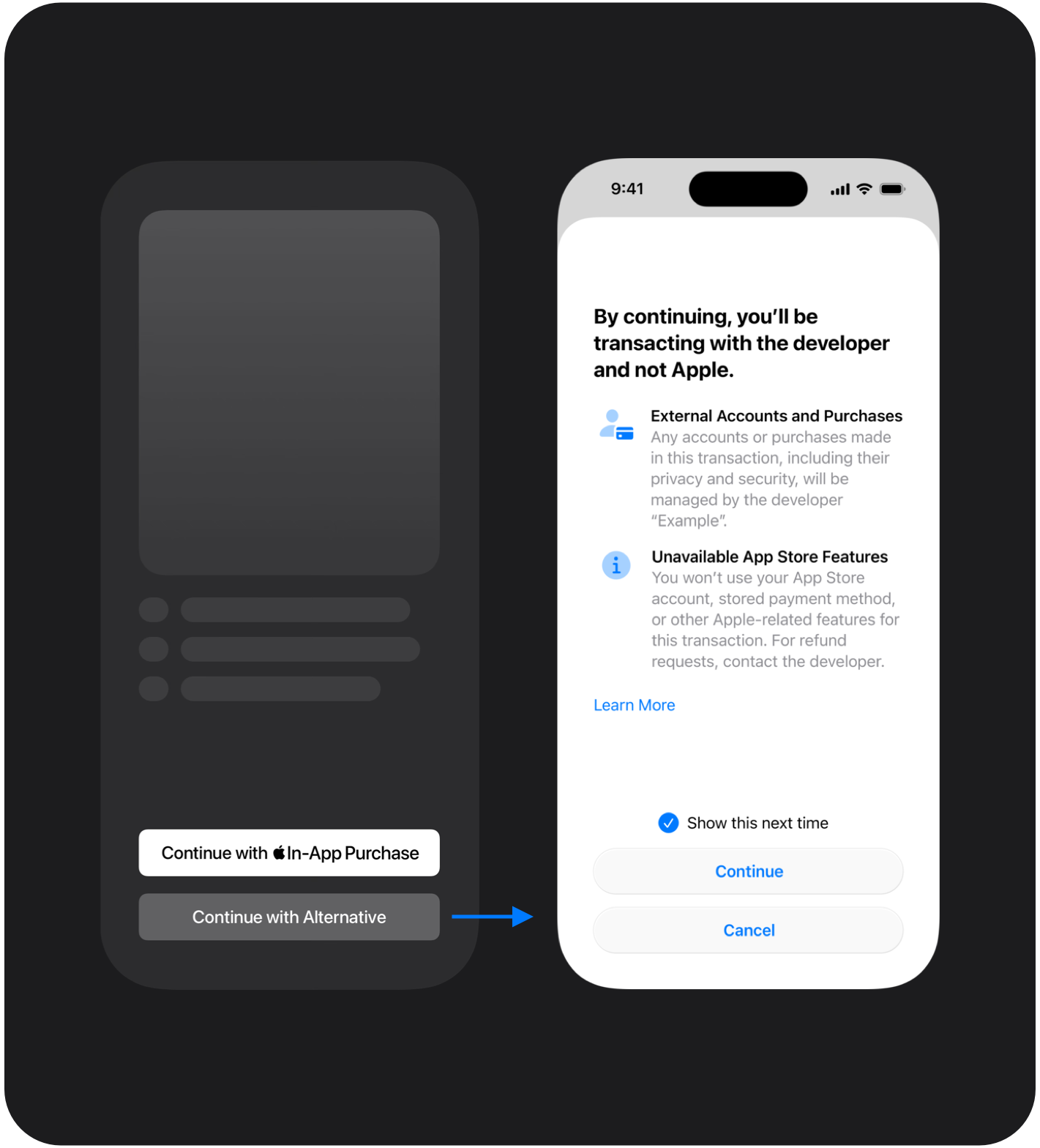
Brazil's fee structure: 10%-21% on in-app transactions, 10%-15% on link-outs, represents a meaningful improvement over the standard 30% IAP commission. The economics are real, but they require careful modeling. The US remains the benchmark: the only major market where external transactions currently carry zero commission. Brazil sits closer to Japan in terms of margin profile.
The side-by-side requirement also shapes what's possible from a UX perspective. Publishers cannot design an external-first checkout flow in Brazil the way they can in the US, Apple IAP must always be present alongside alternatives.
The Bigger Picture
The US is the outlier, the only major market where external payments carry zero platform commission, a result of court-ordered injunctions rather than negotiated settlements. Every other market that has opened up, Japan, Brazil, the EU, has done so with fees attached.
The regulatory pipeline continues to expand. South America, Southeast Asia, and additional markets are likely to follow Brazil's model over the next months. The window is open. The terms are different in every room.
Sources:


